
The short answer
Coloured or straightened hair has lost part of its natural protection: it needs a gentle shampoo, a conditioner at every wash and a mask once a week. Protect it from styling heat and the sun, and space out chemical treatments. For straightening treatments, always ask whether the product contains formaldehyde.
Why colouring and straightening weaken hair
The hair fibre is covered in scales, the cuticle, which protect the core and hold in water. Permanent colour or bleaching has to open these scales to let the pigment in or dissolve the original one. Chemical straightening also alters the internal structure. The result: hair becomes more porous. It absorbs water quickly, loses it just as quickly, breaks more easily, and the colour fades wash after wash.
Add a straightener at 200 °C every morning, the hairdryer, the summer sun in Agadir or Tangier, salt and chlorine, and you get the dry, dull ends many people know well. The good news: damaged hair cannot truly be “repaired”, but you can clearly improve how it looks and, above all, limit the damage on new growth.
The washing routine that preserves colour
The first step is the shampoo. Choose a gentle formula designed for coloured or delicate hair, and apply it mainly to the scalp: the lather that runs down is enough for the lengths. Rinse with lukewarm water rather than very hot water, which opens the cuticle further.
- At every wash: a conditioner on the lengths and ends, left on for one to two minutes. It smooths the scales and makes detangling easier, so less breakage.
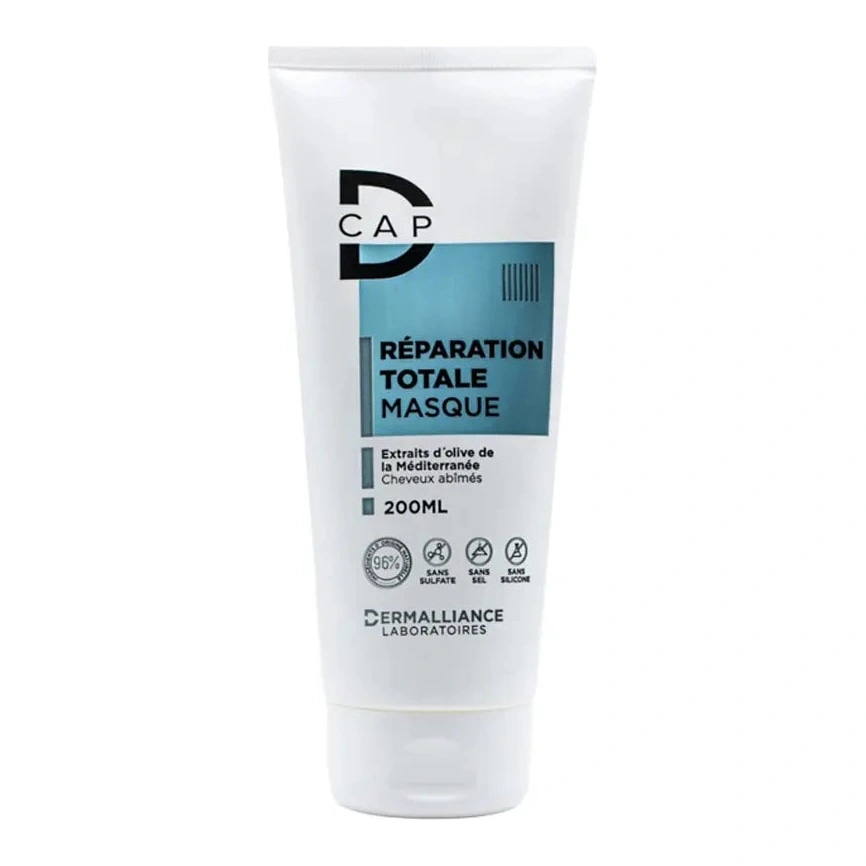
- Once a week: a repairing mask instead of the conditioner, for five to ten minutes.
- On wet hair: a detangler or a wide-tooth brush, starting from the ends. Wet hair is more fragile.
- Wash less often if your scalp allows it: every shampoo takes a little pigment with it.
You will find shampoos, masks and leave-in treatments in our hair care section.
Heat and sun: the two everyday enemies
Heat from styling tools is often what damages already treated hair the most. A few simple habits make a real difference:
- Dry first in the air or with a microfibre towel, without rubbing.
- Apply a heat-protection spray or serum before the hairdryer or straightener.
- Lower the straightener temperature and pass only once over each section.
- In the sun, cover up with a hat or a scarf. After the beach or the pool, rinse with clean water.
| Situation | The right move |
|---|---|
| Straightener or blow-dry | Heat protectant, moderate temperature |
| Beach, pool | Hat, rinse with clean water straight afterwards |
| Hammam | Mask applied to the lengths during the session, rinse with lukewarm water |
| After colouring | Gentle shampoo, wait a few days before the first wash if your hairdresser advises it |

Brazilian blowout and formaldehyde: what you need to know
The Brazilian blowout, or keratin straightening, is in high demand in Morocco. The principle: a solution is applied to the hair, then “sealed” with a hot iron. The problem is that some of these solutions contain formaldehyde, sometimes under another name (formol, formalin, methylene glycol). When heated, it is released into the air.
The FDA, the US health authority, points out that these fumes can irritate the eyes, nose and throat, cause coughing, headaches, nausea or skin reactions, and that formaldehyde is classified as carcinogenic to humans by the International Agency for Research on Cancer. The risks increase with the length and repetition of exposure, for the client as well as for the hairdresser.
- Ask the salon for the name of the product and its ingredients.
- Say no if the room is not well ventilated or if the smell stings your eyes.
- Avoid this type of treatment during pregnancy and if you have asthma, and talk to your doctor.
- Space out sessions: this is not a treatment to repeat every month.
When breakage or hair loss is worrying
Hair that breaks halfway down is not the same as hair that falls out with its root. Breakage most often comes from treatments and heat. Significant hair loss, on the other hand, has other possible causes (fatigue, deficiency, after pregnancy, stress): our hair loss page helps you sort it out. If your scalp burns, turns red or oozes after colouring or straightening, or if you lose hair in patches, see a dermatologist.
Finally, trim damaged ends regularly. No treatment can glue a split end back together, and a clean cut instantly makes hair look better.
The products we recommend
Genuine, delivered across Morocco, cash on delivery.
 −33 %
 −33 %
 −34 %
 −5 %

Frequently asked questions
Can a mask really repair damaged hair?
It clearly improves softness, shine and detangling by coating the fibre, but the effect only lasts until the next few washes. That is why you repeat it every week. The truly damaged part ends up being cut off; the treatment mainly protects what is growing.
How long should I wait between two colours or two straightening treatments?
There is no universal rule, but the more you space them out, the healthier your hair stays. For roots, you can touch up only the regrowth rather than the full length. Your hairdresser is still the best person to judge the condition of your hair.
Is the Brazilian blowout dangerous?
It all depends on the product used. Those that contain or release formaldehyde when heated expose you to irritation and health risks, especially with repeated use. Ask for the ingredients and avoid this treatment during pregnancy.
Do I need a special shampoo for coloured hair?
A gentle shampoo is often enough. Formulas for coloured hair are designed to be less harsh and limit pigment loss. What matters most is lukewarm water, conditioner and protection from heat.
This advice is cosmetic and general. It does not replace the opinion of a doctor, dermatologist or pharmacist, especially during pregnancy, for children, or if a problem persists.
Sources
- Hair Smoothing Products That Release Formaldehyde When Heated — U.S. Food and Drug Administration (FDA)
- Tips for healthy hair — American Academy of Dermatology (AAD)
- Dermato-Info, le site grand public de la Société Française de Dermatologie — Société Française de Dermatologie


